
Symptoms
- Weakness or paralysis on one side (hemiplegia)
- Difficulty with speech and swallowing
- Balance and coordination problems
- Cognitive and memory issues
- Visual disturbances
- Spasticity in affected limbs
Common causes
- Blood clot blocking a brain artery (ischaemic stroke)
- Rupture of a blood vessel in the brain (haemorrhagic stroke)
- High blood pressure
- Heart disease
- Diabetes
- Smoking and high cholesterol
How physiotherapy helps
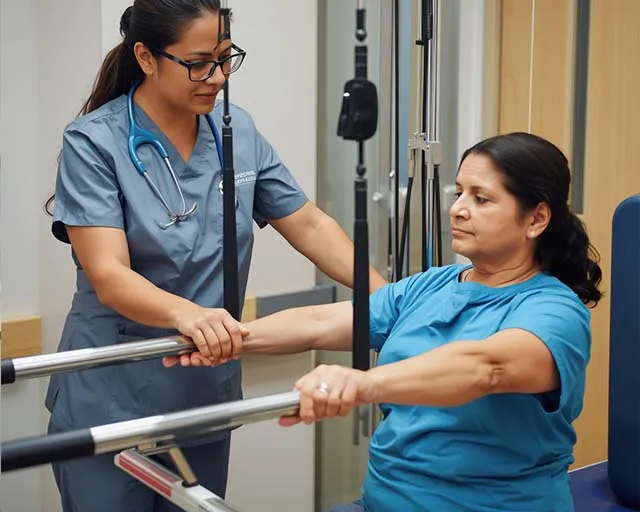
Comprehensive neuro rehabilitation includes task-specific training, constraint-induced movement therapy, balance and gait training, spasticity management, ADL training, and caregiver education. Treatment is individualised based on stroke type and severity.
Exercises your physiotherapist may give you
- Weight shifting and balance exercises
- Sit-to-stand training
- Gait training with/without assistive devices
- Upper limb reaching and grasping activities
- Constraint-induced movement therapy tasks
- Core stability exercises in sitting and standing
Please note: start these exercises only after an assessment, and stop if pain increases. Your physiotherapist will choose the right exercises, number of repetitions and progression for you.
Guide written by the physiotherapists of CAPT – Centre for Advanced Physiotherapy, MVM Educational Trust. For more reading, search MedlinePlus (U.S. National Library of Medicine).